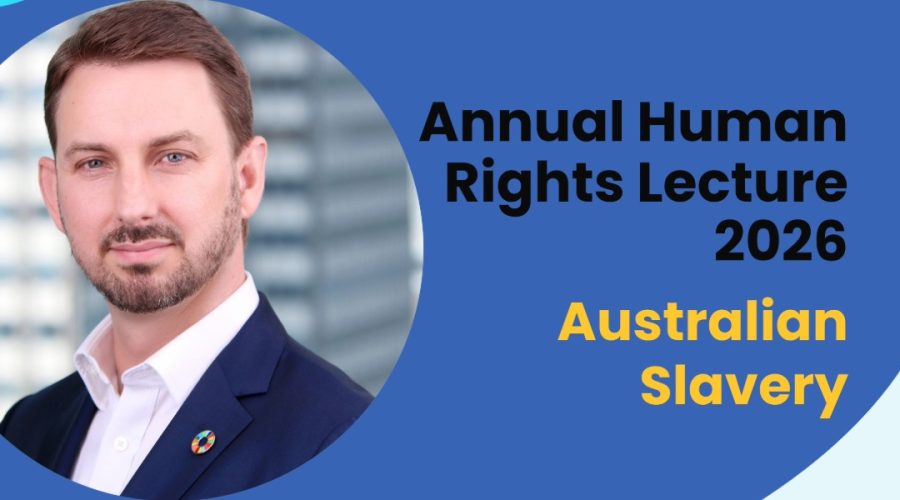
Annual Human Rights Lecture
Armidale Sanctuary invites all to their Annual Human Rights Lecture 2026.
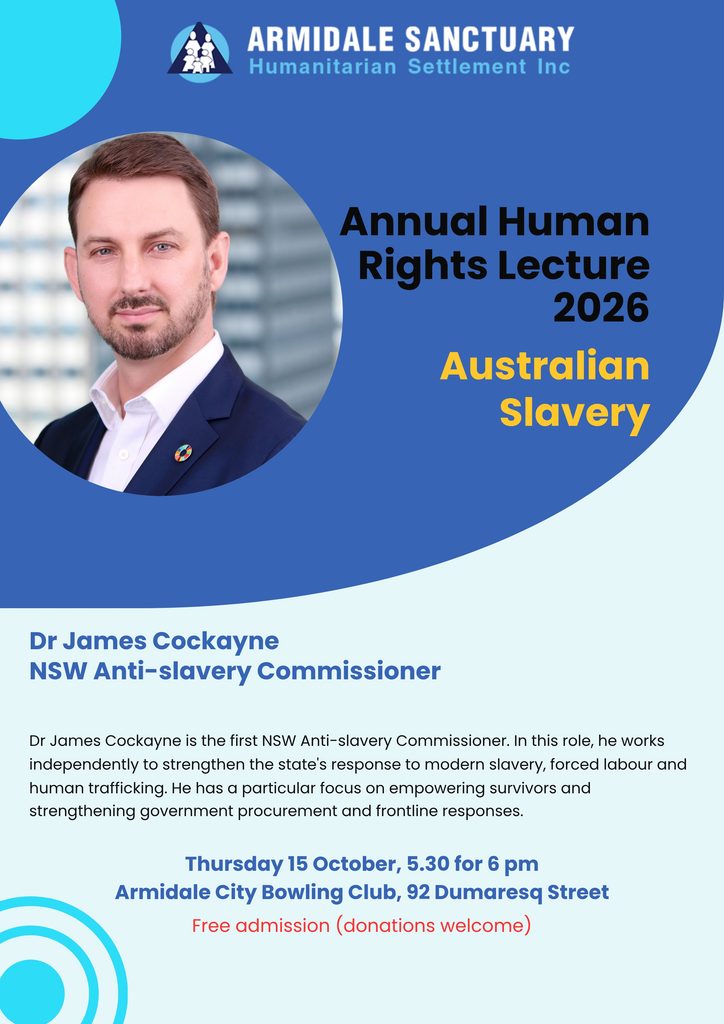
The speaker for this year’s event is James Cockayne, the NSW Anti-slavery Commissioner.
The event is being held on Thursday 15 October, 2026 at the Armidale City Bowling Club, at 5.30pm for 6pm start.
Admission is free, donations are welcome.
Modern slavery can happen to anyone, anywhere, and is often hidden. Learn more about modern slavery in Australia, including how many people it affects and who could be at risk.
What modern slavery looks like in Australia
Modern slavery happens in Australia. It can occur in any sector and segment of society. These crimes are often hidden in plain sight. They can be difficult to identify, even by people experiencing harm.
Modern slavery can happen:
to people of any age, gender or background – including migrants and people born in Australia
- within any family or community
- in a city, town or rural area, and in any home or workplace.
Modern slavery can also be used overseas to produce the goods and services Australians buy and use. Find out more about Australia’s response to modern slavery in supply chains through the Modern Slavery Act.
Learn more by watching Anti-Slavery Australia’s Modern slavery happens in Australia- external site video.
How many people it affects
During the 2023–24 financial year, the Australian Federal Police received 382 reports of suspected modern slavery. Human trafficking and forced marriage were the most reported forms.
Research by the Australian Government and Walk Free Foundation estimated that only 1 in 5 modern slavery victims in Australia are detected.
Who is at risk
Anyone can experience modern slavery in Australia, but some things can increase risk. For example, not knowing your rights about marriage and work in Australia.
Young women and girls are most at risk of forced marriage, although it can happen to people of all ages and genders.
Other factors that can increase risk can include:
- working in isolation – for example, in a remote location, or at times when other people aren’t around
- being in a job or situation where there is a big power imbalance between you and the people around you
- being apart from family and other support networks
- feeling like you don’t have other job options – for example, if you don’t have many qualifications, speak limited English, are in financial stress (sometimes because of unemployment or underemployment)
- are living in Australia on a visa and don’t understand your visa conditions or support available.